Is My Child Obese?

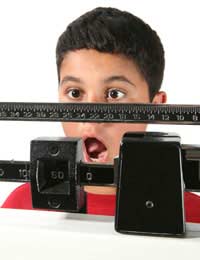
According to statistics, more and more children in the UK are becoming overweight and it starts early – with one in ten six-year-olds already identified as obese. If the problem continues into a child’s teens, they are more likely to be obese as adults too.
As well as the emotional problems and low self-esteem that affect many overweight children, there are serious health implications. For example, they are more likely to suffer from type II diabetes, high blood pressure, stroke and heart disease later in life.
Most experts agree that obesity is rarely caused by a medical problem. It is usually the result of several factors, including lack of exercise and unhealthy eating habits.
Introducing a Healthy Diet
A weight-loss diet is not appropriate for children, unless they are under medical supervision. It’s better if they ‘grow into’ a more appropriate weight, which is best achieved by changing poor eating habits so that they’re eating a normal, healthy diet:- Make sure children are getting a good balance of carbohydrates, proteins, fats, vitamins, minerals and fibre
- Sit down to eat together as a family as much as possible
- If you go out to eat, steer clear of fast food restaurants
- Don’t keep junk food, sugary drinks or high fat snacks in the house
- Do have plenty of healthy snacks available, like fresh fruit, whole grain breads and crackers, raw vegetables and whole grain breakfast cereals
- Encourage children to help with meal planning and cooking
- Make sure they understand how good food helps to keep people healthy, but don’t make it too personal
- Set a good example. The whole family needs to adopt good eating habits if it’s going to work, not just the child who is overweight.
Getting Some Exercise
Life tends to be less active these days and it can be difficult for children to get enough exercise. Many parents worry about their safety if they let them out to play and many children will opt to watch TV or play on the computer rather than go outside.- If school is near enough, walking there and back is a great way to get exercise. Older children could walk with friends, helping their independence and self-esteem at the same time.
- If walking to school seems impractical – for example, if parents want to drop their children off on the way to work or the roads are very busy - see if the school can set up a scheme like a ‘walking bus’. Or get together with other local parents and take it in turns accompany them.
- Encourage children to join sports clubs, after-school activities and youth groups
- Go out together as a family for walks, bike rides, swimming, ice skating, ball games, dancing – anything you enjoy. Let the children help choose activities.
- Set a daily limit on the amount of time children can spend watching TV and playing computer games.
- Leave the car behind as often as possible. Many children care deeply about environmental issues, so they’ll probably support this idea if it’s sold in the right way.
Provide Loving Support
Children with weight problems can be very sensitive about it. Don’t focus too closely on them – a low key ‘whole family’ approach is much better. Try to avoid using food as treats or rewards. It’s best to take the focus off food and provide plenty of attention, comfort and encouragement in other ways.Getting Help
If things don’t improve or a child is very seriously overweight, it’s best to get specialist help. The GP or health visitor is a good place to start. They can also help with other problems like depression or low self-esteem.
Related Articles in the '4-9 Year Old Nutrition' Category...
Billie - Your Question:
My 7 year old daughter is overweight, and has been for about a year now. She had meningitis last year, and had horrible migraines for months. Ever since then she is ALWAYS hungry, and has gained about 25 lbs and her stomach is really getting big. She drinks water all day, and with every meal, it is all she ever wants to drink. However, she is always complaining of being hungry, and eats as much as I do during meals, and wants something else almost immediately. I think a lot of the time, she's just bored, but I am getting really worried about her health. She is already outgrowing size 10/12 clothes, and she just turned 7. She does have a bunch of energy, but I swear she looks bigger every day. Please advise.
Our Response:
We can't really give individual advice apart from that described in the above article. If you are worried it might be worth asking your doctor to see if there is any underlying reason why she is always feeling hungry especially if she's drinking a lot of water with meals.
KidsAndNutrition - 15-Jun @ 2:40 PM
My 7 year old daughter is overweight, and has been for about a year now. She had meningitis last year, and had horrible migraines for months. Ever since then she is ALWAYS hungry, and has gained about 25 lbs and her stomach is really getting big. She drinks water all day, and with every meal, it is all she ever wants to drink. However, she is always complaining of being hungry, and eats as much as i do during meals, and wants something else almost immediately. I think a lot of the time, she's just bored, but I am getting really worried about her health. She is already outgrowing size 10/12 clothes, and she just turned 7. She does have a bunch of energy, but i swear she looks bigger every day. Please advise.
Billie - 14-Jun @ 4:29 PM
Traceyp79 - Your Question:
My 4 year old daughter is very over weight, she weighs 4st 13lb, it's mainly her belly. She wants to eat all of the time. She drinks plenty and sleeps through the night but is a very heavy snorer. She's a very popular, kind and thoughtful girl and has lots of friends, however I have heard some people tell her she's fat ??, it really hurts me, and for the time being is like water off a ducks back to her, but I know someday soon it won't be.Just lately I've cut out all crisps, chocolate biscuits, well all sugary snacks and said if your really Hungary there's fruit, which she has actually started to eat more of but not enough and only after the tears. I'm overweight myself and actually think I need as much help as her to sort this out. Please help x
Our Response:
Can you ask your GP or Health Visitor for help with this? If you can afford it, you could try one of the weight loss organisations such as slimming world or weighwatchers etc. Once you have got health eating into your way of life, the effects will pass on to your daughter. Also consider changing your routine, so it involves more activity - e.g skipping, trips to the park, walks, swimming, ballgames etc. Once you start, they'll become easier and you'll both become fitter and slimmer.
KidsAndNutrition - 25-Aug @ 12:32 PM
My 4 year old daughter is very over weight, she weighs 4st 13lb, it's mainly her belly. She wants to eat all of the time. She drinks plenty and sleeps through the night but is a very heavy snorer. She's a very popular, kind and thoughtful girl and has lots of friends, however I have heard some people tell her she's fat ??, it really hurts me, and for the time being is like water off a ducks back to her, but I know someday soon it won't be.
Just lately I've cut out all crisps, chocolate biscuits, well all sugary snacks and said if your really Hungary there's fruit, which she has actually started to eat more of but not enough and only after the tears. I'm overweight myself and actually think I need as much help as her to sort this out. Please help x
Traceyp79 - 22-Aug @ 7:18 PM
Rogratkew - Your Question:
My 5 year old daughter is over weight she is constantly hungry always asking what's next jumps straight up when she heard an opening of some form of good packaging she suffers with crinic Consipatipn since birth so she is stacking up everything she is eating and not releasing I am so worried she will be the " fat kid" at school. Ps. She eats what ever she can even if she isn't keen on it
Our Response:
You may want to talk to your GP or health visitor about this to make sure there is no underlying problem. Make sure your daughter drinks lots of water. Glam it up with crushed ice and a lemon or orange slice and put it in a fancy cup/glass/bottle, if she finds straight water too boring. It's easy to think you're hungry when you're actually thirsty, so this may be part of the problem. Give her plenty of healthy snacks if she's more of a "grazer" - things like carrot sticks, celery and sugar snap peas are great. Try distraction techniques...it's easy to eat while you're watching TV, so make sure there is always something else to occupy her - colouring in, french knitting, designing dolls clothes etc. Try also to make sure that she is doing something active on a regular basis so that any food she does eat is "worked off"...show her old skipping games you did as a child, hopskotch or an obstacle course.One of our childhood favourites: Watch an equestrian event (You Tube would be great for this) then design your own horse jumping course, you can be the horse or the rider! Dancing is also great for wet weather days and there are lots of dance dvds/games available for this.
KidsAndNutrition - 27-Aug @ 11:49 AM
My 5 year old daughter is over weight she is constantly hungry always asking what's next jumps straight up when she heard an opening of some form of good packaging she suffers with crinic Consipatipn since birth so she is stacking up everything she is eating and not releasing I am so worried she will be the " fat kid" at school. Ps. She eats what ever she can even if she isn't keen on it
Rogratkew - 26-Aug @ 12:29 AM
My son is going to be 14 and has been overweight for a couple of years. He is tall, so it doesn't look like he is that overweight, but he is. While my husband and I are at work, he is home alone to eat whatever he feels satisfies him. I'll buy low calorie foods and since he thinks it's healthy he will eat 4 or 5 of them. Whenever I buy something knew he has to be the first one to try right away. He sneaks food on his room and drinks sodas without us knowing. He knows he is overweight and he use to play football and be in shape, but with his asthma getting worse it's hard for him to exercise. He said he is not depressed or anything just constantly hungry. What should I do?
None - 14-Jul @ 9:30 PM
@joseph2820. Take steps to reduce portion sizes gradually. If you do it straight away then your daughter will simply go looking immediately for top -ups. Serve each meal with a large glass of water (dress it up with ice and a slice of lemon or orange if necessary) and get her to drink a before/during the meal. This will help her feel fuller. After a few weeks of sticking to this regime, you'll (both) find that you don't need such big portion sizes. With snacks try to focus less on fruit and more on vegetables (e.gcarrots, cherry tomatoes, cucumber etc) as they don't contain as much fructose (natural fruit sugar can still affect wait gain). Take up some kind of activity that means you can both get out together and do something that will slowly get you back to a stage where vigorous activity is something you enjoy. Walking (getting dog is great for this) to the park, skipping, playing hopscotch etc. Every little helps but don't make it seem like a chore.
KidsAndNutrition - 18-May @ 11:01 AM
my 9 year old child is very overweight and I am getting worried about her health.I was overweight as a child and still am as an adult.My health is poor and I do not want my child to be like me.Without making an issue of it what is the best way to reduce her eating habits.She constantly says she is hungry but I must confess she does eat plenty of fruit and veg but her portion sizes are large.How much should a healthy 9 year old have as a portion size.
joseph2820 - 12-May @ 8:44 PM
@minnie. You've not mentioned how old your son is. If he is still young enough he will not be able to go out and buy the foods you mention for himself. If you don't keep them in the house he cannot eat them. Get him involved in helping you prepare a menu for the week. Make homemade healthy pizzas together, homemade oven baked chicken nuggets, oven cooked potato wedges or chips etc. There are lots of healthy alternatives - it will take time and also quite a lot of effort on your part to make sure you make everything from fresh. Make it interesting by putting food in mock takeaway boxes if necessary. Give him some water with each meal and make him chew everything more slowly - it makes you feel fuller! Good luck.
KidsAndNutrition - 1-Dec @ 1:03 PM
How can I help my child when all he likes is fattening foods such as pizzas, noodles, string cheese, chips, ice cream, fries, chicken nuggets, hot pockets, cokes and such. He does not like any vegetables except mashed potatoes but he does like almost every fruit. It does no good to offer any other items because he won't eat so it's either buy them or risk him not eating at all. He can eat a whole totinos pizza and 15 minutes later say I'm hungry sometimes it's even before the 15 minutes are up. Please help and all comments or suggestions will be greatly appreciated so thanks in advance.
Minnie - 28-Nov @ 5:55 PM

Re: Superfoods on a Budget
I just checked out these fantastic tips for buying superfoods on a budget! Eating healthy doesn’t have to be expensive. Can’t wait to try…
Re: Fun Facts: How Many Calories Does a Child Burn?
hi, im eleven yrs. I weigh about 100 lbs and believe I am over the normal weight. I am about 4’10 ft. I…
Re: Fun Facts: How Many Calories Does a Child Burn?
I want to clear this up for everybody worried about their weight, especially at a young age you shouldn’t…
Re: Dealing with a Child that is Always Hungry
I am the great grandmother of an 8 year old that I mostly take care of her mom is around but she totally depends…
Re: Fun Facts: How Many Calories Does a Child Burn?
I’m 11 years old and recently got a smart watch. This isn’t a big question but I can’t find how many…
Re: Dealing with a Child that is Always Hungry
I'm immediately suspicious of an article that suggests cereal as a healthy snack. Cereal (especially cereal…
Re: Fun Facts: How Many Calories Does a Child Burn?
How many calories SHOULD an average twelve year old burn daily???
Re: Fun Facts: How Many Calories Does a Child Burn?
I'm 9 years old and I'm trying to set up a health journal but I don't know how many calories I should…
Re: Fun Facts: How Many Calories Does a Child Burn?
Hiw much calories should an average 10 year old burn a day?
Re: Dealing with a Child that is Always Hungry
I’m 16 and my sister is 11 years old 57 inches and weighs 90 pounds she only drinks like 2 or 3 16 ounce bottles…